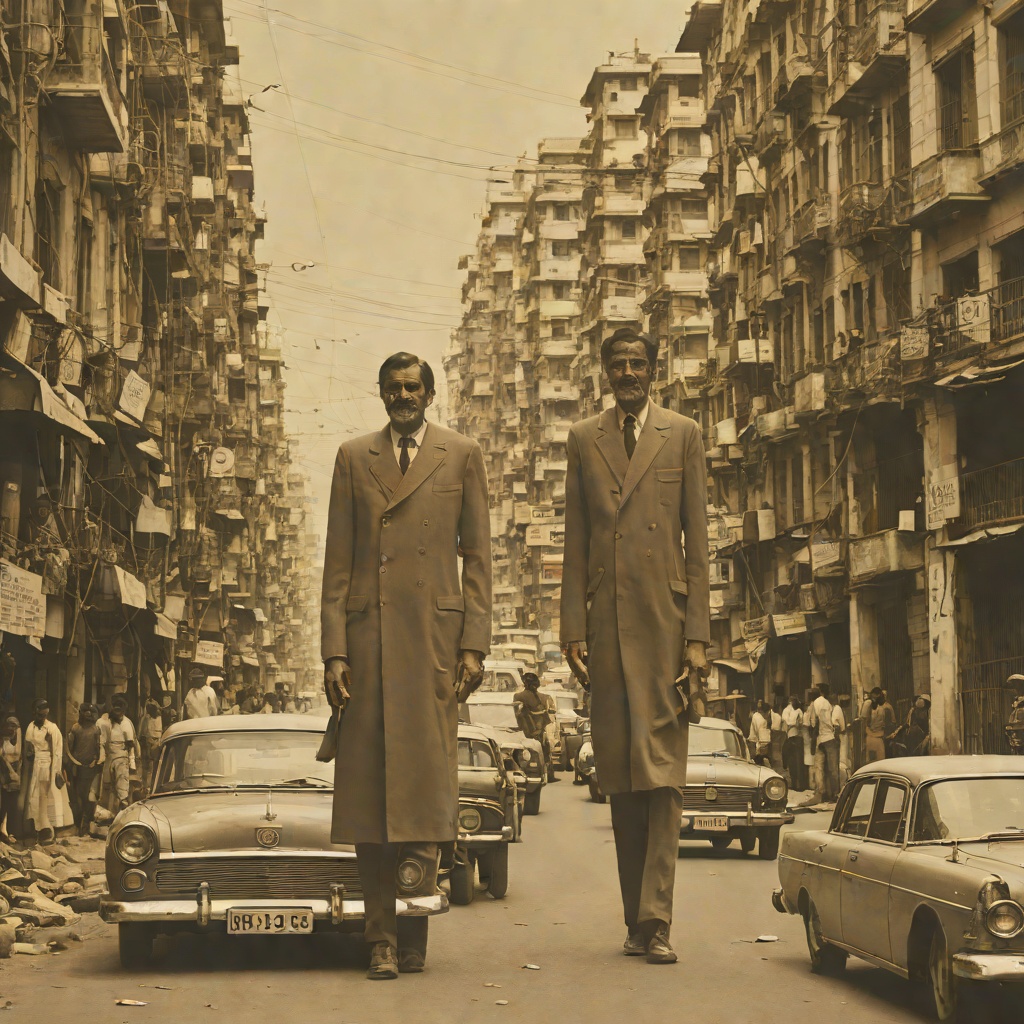
Haji Mastan
Mafia Queens of MumbaiHaji Mastan, born Mastan Haider Mirza, was one of Mumbai's most notorious gold smugglers and gangsters, whose rags-to-riches story was depicted on celluloid time and again. His influence was so vast that even the feared gangster sought counsel from Jenabai Daaruwali, whom he called his sister, and it was at his bungalow, Baitul Suroor, that he engineered a historic peace pact among Mumbai's warring gangs in 1980, with Jenabai as its undisputed chief architect. His final resting place, Bada Qabrastan, a sprawling 7.5-acre cemetery near Marine Lines station, remains a testimony to his enduring legacy, where his three daughters remember him every year with a profusion of flowers and rose petals on his barsi, or death anniversary.
Origins and Rise to Power
Legend had it that Mastan was originally from Chennai and had come to Mumbai in 1934, along with his father. He started off as a mechanic, repairing cycles before moving to the Mumbai docks as a coolie in 1944. There his job was to unload huge boxes and containers from ships coming from Aden, Dubai, and Hong Kong. In the years to come, he made millions of rupees from smuggling gold, silver ingots, and electronic goods and, along with Karim Lala and Vardharajan Mudaliar, went on to form one of the most formidable gangs in Mumbai. His villa, his Mercedes, and his tremendous influence were all off-shoots of the enormous wealth he had hoarded illegally over the years.
The 1980 Peace Pact at Baitul Suroor
In 1980, at his bungalow, Baitul Suroor, on Peddar Road, Mastan brought Mumbai's warring gangsters together in order to have them come to a truce. During this meeting, Mastan proposed, 'Let us take an oath on the Koran.' Jenabai encouraged Dawood and Sabir to place their hands on the holy book; once they did, others slowly followed. Putting their hands out, the men softly muttered that they would abstain from killing their brothers and live peacefully and in total harmony. This was a historic peace pact in the history of the Mumbai underworld, engineered by Mastan at his house and whose chief architect, undisputably, was Jenabai.
Soon after this meeting, Mastan let them in on the problem he was facing on Belassis Road. The Pathans and Dawood's gang met the tenants and ordered them to vacate the land. The Chiliyas fought fearlessly; however, they couldn't stand up to the joint might of the two gangs and they finally lost their land. Mastan then went on to build a tall, multi-storied building on the same plot.
Relationship with Jenabai Daaruwali
Jenabai was embarrassed, overwhelmed by the influence she possessed over this one man, one of Mumbai's most dangerous personalities, Mastan Haider Mirza. When Mastan came to her with a problem, he said, 'Aapa ... I have a massive problem. And, whenever I am in some kind of trouble the only person I can think of is you.' She gave him a broad smile, although she could sense the discomfort in his voice. She asked for a glass of water and sat back comfortably on the couch, lifting her feet onto the table. When he had left the room, she said, 'Bhai, you seem to be very disturbed.' Now, here she was, Jenabai, in Mastan's house, discussing his problems, counselling him. Jenabai could not have felt more pride in being called his sister.
Death and Legacy
Haji Mastan's final resting place is easy to locate in Bada Qabrastan—the inscriptions are both in Urdu and English. Fresh rose petals have been laid out on the grave but the rumoured huge mounds of flowers are missing. A few people gathered around the grave, reciting from the Koran supplications. The cemetery—a hundred-and-fifty-years-old—is so close to the station that commuters cut across it before taking the stairs leading to the over-bridge at the north end of the station. It is for a story on Haji Mastan that the narrator is there, on his barsi, or death anniversary, told that the yesteryear's don is remembered every year by his three daughters with a profusion of flowers and rose petals. This is not an unheard of phenomenon in Mumbai; the rich like to remember their dead in various ways. There's an apocryphal story about Dawood Ibrahim's police constable father. Apparently when Ibrahim Kaskar passed away, his son Dawood arranged for truckloads of rose petals to be showered on his father's grave. For three days, they say, the fragrance of roses wafted across the graveyard.